
Finishing Freshman Year of College

Finishing freshman year of college.

My daughter attended an independent school in Charlotte from Transitional Kindergarten through 12th grade, and the former head of the school often had wise words to share. One of his favorite phrases? “Finish well.” As the end of each school year approached, I would remind our daughter, “Finish well!” Did she always hear me? She always finished pretty well, so maybe.

Now, the end of her freshman year of college is rapidly approaching. Like a train out of control, freshman year is moving forward at lightning speed. She will be home in less than a week. Less than a week! I find myself saying, “Finish well!”

We moved her into her dorm at the beginning of August. It was an exciting time. It was a scary time. Like lots of moms out there, I was excited for her to experience college, but I was nervous about leaving her 450 miles away. However, I remembered something I had read before:

Put the basket in the water.

I got that sentence from a piece written by Ashlei Woods. You can read it here. “Put the basket in the water” is a reference to the time of Moses, when midwives were ordered by Pharaoh to kill baby boys born to Israelites by drowning them in the Nile. Moses’s mother, in an effort to save her baby, placed him in a basket and placed the basket in the river, in hopes that he would live. I’m no Biblical scholar, but even I remember the story from Sunday School lessons. Moses did live, obviously, and went on to become a great prophet. I certainly don’t expect my daughter to become a great prophet, but I want her to live and become the best person she can be. I want her to live life. And by placing her proverbial basket in that proverbial river (college), I sent her on her way.

Has she learned things in college that will help her in her future endeavors? In short, yes. She has learned something in each class she has taken. She has learned about music, public relations, writing…so much. More importantly, she has learned more about who she is. She has learned how to make friends from lots of different places. She has learned how to handle medical emergencies and automobile situations. She has learned how to make doctor appointments and pick up her own prescriptions. And even though I always tried to expose her to as many new experiences as possible, she has been exposed to even more new experiences. She has learned to manage on her own. Sure, she still gets advice (sometimes wanted, sometimes not) from me, but she is doing it! We still support her financially, but she is doing it! We put the basket in the water, and we trusted God and trusted her.

Have there been hiccups along the way? Yes, but she has learned from each one. Last week, SpaceX launched a test rocket…the most powerful one ever launched. There was excitement surrounding it, but it failed. And afterward, Elon Musk, the founder of SpaceX, seemed happy in spite of the failure, saying they (the engineers, the company) would learn a lot from the failure. He was excited about what they would learn! Those words stuck with me, because this very successful man was reminding the world that we learn from failure. Don’t get me wrong. Our daughter’s hiccups, so far, haven’t been in the classroom. But any hiccups she has experienced along the way have been opportunities for learning. Learning what doesn’t work is how she will learn what does work.

In a few days, we will move our daughter out of her freshman dorm. As she finishes her freshman year, I will remind her several times, “Finish well.” I am already reminding her to start packing things up and cleaning out her room. And after we get her home for the summer, I feel sure we will notice she is a different girl than the one we sent to college in August. She is older. She is more confident. She is more independent. She is more knowledgable. As my own parents said when I came home after my freshman year, “We sent our daughter off to college and got a different person back.” They often joked that I was “switched at college.”

We are excited to have our girl home soon.
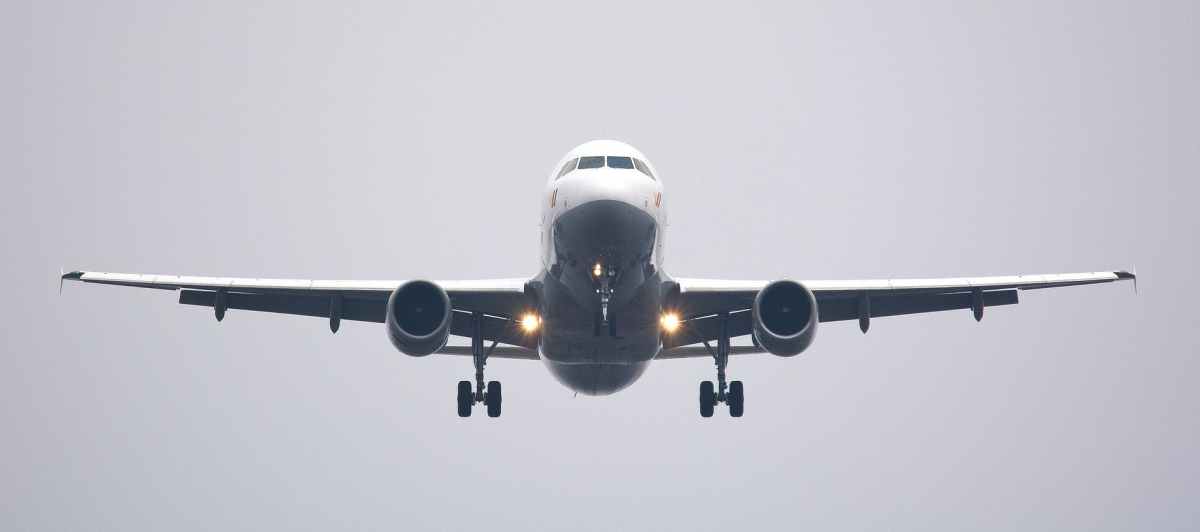
Fear of Flying? Take Control

jesse-ramirez-491313-unsplash

If you’re afraid of flying, you’re not alone. I’m not one of those people, but I know a lot of them. Over the years, I’ve come to the conclusion that empowerment is the key. People are afraid to fly, because they feel a loss of control. They know commercial air travel is safer than driving to the airport, but they are driving themselves to the airport. On the plane, they are handing over control to a stranger.

We can talk till we’re blue in the face about how much safer air travel is than driving, but that doesn’t help those people who are afraid. This is one of those situations in which knowledge is power. People can feel more confident about flying if they have a plan.

I’m not going to get into the detailed engineering of jet engines. You don’t need to know a lot about the thrust of jet engines, but here’s the basic info:  Jet engines suck in air through a fan in the front. The high speed blades in a compressor raise the air pressure, and gas is added. As the mixture expands, it shoots out the back of the engine, causing the jet to thrust forward. Simple. What you really need to know is how you can take control of your own situation, so I’m going to tell you. I wrote a blog recently about making air travel easier. For the most part, it was about eliminating stressors leading up to the flight.If you start with eliminating the stressors of the airport, it’s easier to stay calm. You can see my previous piece, Making Air Travel Easier, by clicking here.

Now I’m going to tell you some things that might help eliminate some of the fear of actual flying.

AIRLINE TRAVEL IS SAFER THAN EVER USA Today ran an article in April, after a Southwest emergency, with this headline:

Airlines, including Southwest, are so safe it’s hard to rank them by safety

Wow. That should make us all feel a little better. You can read the article here.

KNOWLEDGE IS POWER This is the absolute truth. Since you won’t be flying the aircraft, you don’t need to know how to fly it. The knowledge you need is how to react in an emergency and some calming techniques. In an emergency, we want to be able to get out of the aircraft quickly. I was a flight attendant for a while after I graduated from college. I know it is highly unlikely you will ever have to evacuate an aircraft. Here’s something else I know: accidents are survivable, especially if you have information that will help you get out.

  • When I board an aircraft, the first thing I do is look for the nearest exits…which may be behind me.
  • Count the number of rows between yourself and the two nearest exits. If something happens, and it’s dark, you need find your way out by touch. Even if you are unable to see, you can touch seatbacks and count your way to the exit.
  • Pay attention to the safety demo/video and review the safety card before takeoff. It will make you feel better to see how the exits work. Often, that information is included in the safety card in your seat back pocket. You can see American Airlines’ safety video here. A Delta video is here, and United’s is here. I love the United video. Keep in mind these are samples; different aircraft have different procedures…pay attention.
  • Wear comfortable shoes and natural fabrics. Synthetic fabrics tend to be more flammable, so wear natural fabrics like cotton. Also, wear shoes in which you can move quickly.
  • Fasten your seatbelt low and tight around your hips, decreasing the likelihood you will be injured in an emergency.
  • Keep both feet flat on the floor for takeoff and landing, decreasing the risk of back injury or leg injury in an emergency.
  • Make sure all bags in your row are completely underneath the seats. You don’t want to trip over something if you need to get out quickly.
  • When I travel with my daughter, I tell her, “If there is an unlikely emergency, do exactly what I tell you without hesitation. If I can’t get out, you go without me.”
  • In the unlikely event of an emergency, leave all your belongings behind! The more things people try to carry, the more difficult it is to get people out.
  • If you must take anti-anxiety medication (or have a cocktail) when you fly, take the lowest dosage possible for relief. Less medication/alcohol means you can react more quickly if necessary.
  • If you still can’t relax, try soft music (even classical?) on some earbuds, or watch a lighthearted movie. Play solitaire. Read a book or magazine. But don’t wear earbuds during takeoff and landing; you want to hear any instructions if needed.
  • My trick for calming myself in other situations is to stop and use my senses: think of something I can hear; think of something I can see; think of something I can touch; think of something I can smell. Putting myself through that thought process can take my mind off the situation.
  • Another calming trick is to find something to count. Count passengers. Purchase boxes of candies in the airport, and count the candies in each box…slowly. Counting is a good way of forcing yourself to think about something else besides your anxiety trigger.
  • If you are traveling with children, remember your children pick up on your body language. If you’re anxious, they become anxious. Try to calm yourself.

Here is some information about aircraft cabins you might find useful:

  • Often, the electronic pings you hear are simply passengers using their flight attendant call buttons, flight attendants trying to communicate about drink cart needs, etc.
  • Soon after takeoff, there is often a thud sound as the landing gear is raised back into the underbelly of the plane.
  • Many times, after takeoff, you will notice the aircraft seems to slow down a little. It might be due to noise ordinances over a city or another request by air traffic control. This is normal.
  • Often, when items shift in the galleys, you will hear them banging around.
  • Passengers sometimes slam doors when they go into the lavatories. You may be surprised by the sound. And sometimes you hear the flush.
  • If you have a drop of water fall on you, it is likely condensation from the air conditioner.
  • Sometimes, landings are just a little jarring, because the pilots are compensating for crosswinds on landing. No big deal.

Hopefully, this calms some of your fears. I feel better about situations in life if I have a plan for mishaps. When I drop my child somewhere, I tell her, “If there is a fire alarm or active shooter situation, get out of the building fast. Call me after you get to a safe place.” If I’m in the building too but not with her, she knows to get out first, then call me. And for years, we’ve reviewed the “stranger danger” plans.

Try to arm yourself with the knowledge you need to survive an emergency and some calming techniques, and you will likely feel better about flying altogether. Here are some books offered by Amazon you might find helpful as well: SOAR The Breakthrough Treatment For Fear of FlyingFear of Flying Workbook  and Scared Flightless.

I tend to feel better when I’m armed with knowledge. Knowledge is power.