Learning to Drive

As our daughter’s 15th birthday approaches, so does the excitement about the driver’s learner permit. Yes, it’s exciting, but it’s nerve-wracking at the same time.

It’s a lot more difficult to get a driver’s license now than it was when I was a teenager. Our daughter doesn’t even have her permit yet, and we’ve already had to jump through some hoops.

In North Carolina, there are lots of moving parts to getting a learner’s permit. If no one tells you the different steps, it can be rather confusing. I’ve had to ask multiple people a million questions throughout the process, so hopefully, this will help some of you. This has been our process:

  • Register for Driver’s Education at age 14 1/2, if it isn’t offered in your school. (see bottom of page for contact info for three companies)
  • Send in payment for course.
  • Attend course and pass written driver’s ed test.
  • Go to the DMV for the eye test (if the company doesn’t offer it)
  • Schedule the driving portion of Driver’s Ed.
  • Complete the practice driving (six hours) with instructor.
  • Obtain proof of enrollment form from school.
  • Go to DMV on or after 15th birthday for written test and permit…take birth certificate, form from school, completed Driver’s Ed form, and Social Security card.

If I didn’t have friends who reminded me of things to do throughout the process, my poor daughter probably wouldn’t be on her way to getting her permit in a couple of weeks.

She completed the classroom/written test portion of Driver’s Ed the first week of June, getting it out of the way. She had to be 14 1/2 to enroll in the course. We then had to wait till about a month before her birthday to schedule the driving portion of the course. She had the first of two three-hour sessions this past Saturday, and she said everything went smoothly.

Anyone who has ridden with a new driver knows it can be nerve-wracking, but the only way to learn is through practice.

When the instructor arrived at our house, she told me that she usually stays in the neighborhood for the first two hours, and she never takes anyone on the highway in their first session. I wasn’t worried. I knew our daughter was in good hands, so I was very relaxed while they were gone. Plus, my daughter has practiced driving me around on private roads for months.I knew she would do well driving the instructor in the neighborhood.

When my daughter got home three hours later, she said she thought she had done very well, and she did go on the highway. She said that after they drove around the neighborhood a couple of times, the instructor said she was ready to get out on the open road. First, they practiced some parking skills at a nearby parking lot, and then they got in the interstate! Yikes! I love interstate driving, but some people hate it. I asked my daughter what she thought of it, and she said she liked it. Near the end of the lesson, they drove to pick up the next student driver and came home. She has her next session this weekend.

I’m excited for her, and nervous for us. I remember when I was learning to drive. It was exciting thinking about the freedom that was coming my way! I’m sure she feels the same way, but first, we have to make sure she knows what she’s doing. We have a year to help her practice to get her prepared.

It was a lot easier when I as a teenager. We took Driver’s Ed at school, and then when we turned 15, we could test for our learner’s permit. That was it. I don’t even think we had to show any proof that we had taken Driver’s Ed. But Driver’s Ed at school was fun. We had driving simulators. They were nothing like real driving, but they were fun!

Drivers-Ed-simulator-2

LEAD Technologies Inc. V1.01

I remember some of the driving mistakes I made early on when I was learning to drive. My poor Daddy. Our house was at the top of a hill, so if you backed out of our driveway in one direction, you were backing a little downhill on the road. One day, with my daddy in the car, I forgot to put the car into Drive after backing out, and I stepped on the gas pedal, sending us speeding down the hill backward! Somehow, Daddy stayed calm, and I got things under control. He probably never wanted to drive with me again, but he did. Another time, I stepped on the gas instead of the brake as we turned into a street. And somehow, we survived it.

I’m sure when Daddy was teaching my brother to drive, it was much less stressful for him. My parents had caught my brother driving a friend’s car when he was just 14, so there’s no telling how much driving experience he really had when he got his permit. It wasn’t funny at the time, but Daddy laughed about it years later.

Later, after I had my license, he taught me to drive a manual transmission on a Jeep we had…another adventure, but not one my daughter is likely to have, since so few manual transmission cars are made now.

So our adventure in driving is about to begin. It’s difficult to believe. I remember when our daughter first started walking, and we said she didn’t have walking around sense. Will we feel the same way about her driving?

************************************************

DRIVING SCHOOLS IN CHARLOTTE (I’m only listing companies my friends have used):

Helms Driving School…Website:   http://www.helmsdrivingschool.com/Services.html

Jordan Driving School…Website:   http://www.jordandrivingschoolcharlotte.com

Faulkner Driving School…Website:   http://faulknersdrivingschool.com/about-us.aspx


*


Nuclear War and Other Childhood Fears

Yesterday, while driving my 14-yr-old daughter to a friend’s house, she asked what I worried about when I was a child. We all worried about different things, and I had multiple fears, but at the top of my list, once I was aware it could happen, was nuclear war.

In the 1960s and 1970s, nuclear war was a looming possibility.

I was born in 1967, but I remember Daddy talking about the Cuban Missile Crisis of 1962. My parents were living in Florida at the time. They were in the panhandle, so at least they were in Northwest Florida, but they were on high alert. After all, Cuba is just 90 miles south of the southern tip of Florida, and the Soviets had placed missiles there, aiming them at Florida. Concern was warranted.

Back then, people were buying and building bomb/fallout shelters. If you’ve seen the movie, Grease 2, you probably remember the silly scene with the song, Let’s Do It For Our Country…some teenagers are messing around in a bomb shelter. (Here’s the scene.Grease 2 wasn’t reality, but bomb shelters were.

My parents had been married less than two years when the Cuban Missile Crisis occurred. They, with some friends, devised a plan they would execute in the event of a nuclear attack. They didn’t have bomb shelters, but there were some caves on a friend’s property. If the alarm sounded, they would all drive there immediately. Daddy used to talk about how they drove around with canned goods and other essential items in the trunks of their cars for months, in case something happened.

Of course, the Cuban Missile Crisis simmered down, but the threat of nuclear war loomed for years.

I wasn’t aware of the threat of nuclear war until about 1976…fourth grade. I’m not sure how it came up in class. My guess is we were talking about that year’s Summer Olympics Montreal and the perfect 10s earned by Romanian gymnast, Nadia Comaneci. The world became fascinated with the young gymnast from an Eastern Bloc Communist country.

I remember our fourth grade teacher talking about Communism, saying children in Romania were tested when they were young to see what gifts they had. Some might be gymnastically talented; some might be built for dancing, rowing, or anything else…or maybe have special science, math, or writing abilities. We were told their professions were picked early for them, and if they were gymnasts or gifted dancers, they were taken from their parents to live at a training facility, because that was what the government demanded.

Whether all that was factual, I don’t know. But in fourth grade, that was what I believed. We talked about Communist countries, the Soviet Union, and somehow, we talked about nuclear war. I don’t remember much about the discussion, but I remember the teacher saying, “It’s nothing to worry about. If they drop a nuclear bomb on us, things will happen so fast that you won’t even know it.” What?!?!?! Yes, that thought was terrifying to a nine-yr-old girl. I remember actually thinking, “Why did my parents have me if they knew this was a possibility?” I remember exactly where I was sitting in the classroom when I had that thought. Big thinking for a nine-yr-old.

When I told this to my 14-yr-old daughter on that car ride yesterday, she was wide-eyed. Then, I told her it wasn’t a concern for her generation, because the Soviet Union has fallen, and we made peace with Russia…even though things seem a little precarious sometimes, I think Russia doesn’t want nuclear war any more than we want it.

But she corrected me. “Doesn’t North Korea have nuclear bombs?” I told her they do, but they can’t reach the US mainland. She asked, “But what’s to stop them from using them when they can reach the mainland?” With my limited knowledge of international politics, the only thing I came up with was, “Well, they haven’t used them on South Korea, and they can definitely reach there.” She asked me if the U.S. has the capability to intercept nuclear missiles. I told her I’d heard we do, but I didn’t tell her it’s 50 percent (or less) accurate. I then told her I think the North Koreans are too smart to start an all-out nuclear war with us. I hope I’m right.

When we were discussing fears, it seemed there were a lot of parallels between kids’ worries in 1976 and 2018. I worried about my parents’ health, which is normal, I guess, since that’s who took care of me. She said that had crossed her mind before too. But now there is an added fear that I never considered as a child: school shootings. There were school shootings in 1976…in fact, seven people were killed when a man opened fire at California State University at Fullerton that year, but because we didn’t have a 24-hr news cycle, we didn’t hear about them constantly, so they were never a fear for us. Now, not only do we have a 24-hr news cycle feeding our brains bad news, but children prepare for active shooters. That’s something we never had to do. Living in Alabama, we had tornado and fire drills, but never lockdown drills.

nikolas-noonan-682177-unsplash

The Sandy Hook shootings occurred when my daughter was in third grade, and I remember her asking me if it would happen at her school. I didn’t want to lie, but I didn’t want to scare her either. I explained that we never know what could happen, but that it wasn’t likely. That year, she had a male teacher, so I added, “Besides, you’ve seen your teacher’s muscles. Do you really think he’d let someone get into your classroom?” She relaxed. At age 9, all she needed was reassurance, and that did the trick.

So it seems everything old is new again, plus some. Kids still have the same worries. There’s the threat of nuclear war. Kids still worry about their parents’ health. Plus, the worries of school shootings. My daughter, thankfully, has somehow managed to stop being the worrier she used to be. She told me during our chat that she learned a long time ago that she shouldn’t worry about things over which she has no control. I’m proud of that. I didn’t learn to control those worries till I was in college.

So to help keep those worries to a minimum, I’ll keep the 24-hr news cycle out of our home.


Accentuate The Positive

No matter where you live, people complain about where they live. Maybe they’ve spent their whole lives there, so they’re bored. Maybe they just moved there and think the place they lived before was better.

Here’s the funny thing, though: complaining doesn’t help. No matter the situation or place, pointing out the negative in life makes everything worse. Constructive criticism = yes. Complaining = no.

Recently, I was talking with a friend who moved to Charlotte from a large city in another state last summer, and I asked her how she liked it. Rarely do I hear someone say they don’t like Charlotte. In fact, a pilot on a recent flight out of Miami, before takeoff, said, “We are going to Charlotte. If you don’t want to go there, well, you’ve probably never been there.” It’s a lovely city…not too big, not too small.

When I asked my friend how she liked our fair city, she responded, “It’s fine, but I can’t believe schools close when there’s hardly any snow! What is wrong with you people?” Really? Frankly, complaining about snow days in Charlotte is not very original, so you get zero points for creativity. As always, I explained that, because we don’t get much snow, cities in the south don’t spend money on a lot of snow-clearing road equipment, so some roads can be icy for days. Plus, some people in the south have never driven in snow or ice, adding another level of danger. Blah…blah…blah…I’ve said it all before.

Different regions have different strengths. Southerners might not drive in snow, but we can drive in torrential rains! Before living in Charlotte, I lived in Mobile, Alabama, a city on the Gulf Coast where we had afternoon thunderstorms almost every day during summer. Guess who had trouble driving in it? People from other parts of the country. You won’t see someone from Mobile turning on their hazard lights and slowing to a dangerous crawl on the interstate in a rainstorm..but that’s another discussion for another day.

Sooooo…instead of pointing out the obvious to that friend who was complaining about snow days in Charlotte, I asked, “What do you LIKE about Charlotte?” After all, she chose to live here. Folks can get defensive about their cities.

action blur car daylight

Photo by nika kakalashvili on Pexels.com

I could sit around thinking of bad things to say about Charlotte, but I can immediately  give people a laundry list of great things about this city: great climate, friendly people,  an awesome amusement park, an airline hub, miles of scenic greenways for biking/walking, green spaces everywhere, plays/musicals/shows, museums, sporting events, good shopping, churches on “every corner,” a fantastic Jewish Community Center, great employment opportunities, colleges and universities in the area…the list goes on and on.

Every place has strong points. In a small town, it might be the sense of community or safety. In a bigger city, it might be great restaurants, cultural events, or sporting events…or maybe the city, like Mobile, is near the beach.

When my daughter was younger, I would pick her up from school and say, “Tell me two great things that happened today.” It forced her to find two positives. It’s easy to complain, but it’s more fun to find something good. It started the ride home on a good note.

So, if you’ve moved to a new city or town and can’t find something nice to say, well, don’t say anything at all. You probably haven’t been looking for good things. Search for good things about it. But if you’ve searched and still can’t find anything nice to say, it’s likely not the place that’s the problem.

Next time it snows in Charlotte, I’m going to pray schools are closed, so we can drink hot chocolate and eat grilled cheese sandwiches after we go sledding in two inches of snow till it melts. And next time there’s a rainstorm (with no lightning), I’m going outside and splash through some puddles.

Accentuate the positive, folks!

***This made me think of my Mother telling me one time, “If you think everybody else is crazy, chances are you’re the crazy one.” But that’s for another day…***

For information on events and things to do in Charlotte, click here. Charlotte’s got a lot!

My Daughter Is Starting High School

As the mom of a rising 9th grade girl, I have lots of things swirling through my head, just like most moms of children who will be entering high school in the next few weeks.

On one hand, I feel a sense of relief. We survived middle school. As it turns out, it wasn’t as bad as we thought it would be, but maybe it’s like pregnancy and childbirth…we forget the bad and remember the good. Having a daughter in middle school was stressful at times, but it was a lot of fun too. It was all about survival. They played sports. They had social lives…real social lives they planned themselves. They had drama but solved it themselves. We survived. My daughter even told me recently she loved middle school.

On the other hand, there’s excitement. My daughter is starting high school. I feel like she’s ready. I hope she’s ready. I pray she’s ready.

And while I’m nervous and excited and worried at the same time, I know high school is her job, not mine. My job is to give her the tools to make her successful at this job, but ultimately, it’s her job.

moren-hsu-359121-unsplash

So, I’m arming her with some tools. The first tool she has is experience. She earned experience on her own. You can’t hand your child experience, and there’s only so much they can learn from their parents’ experiences. Besides, they have to go to school, so they all get their own experience. Simply by making it this far, she has experience from which she can build. Hopefully, she has learned and will continue to learn what works for her and what doesn’t. Of course, I will share my own experiences with her, and maybe she will hear some of it.

Another tool: encouragement. She shares with me what her goals are, and I encourage her to do everything she needs to do to accomplish those goals. Let’s say she wants to try out for a sports team. I provide encouragement when she needs it. I tell her I love watching her play, even after a terrible game. When the coach is not happy with her play, I continue telling her I love watching her play. I encourage her to work hard and play hard. I encourage her to be the best she can be. The same can be applied to schoolwork. History test coming up? It’s her job to study and be prepared. I’m not a mom who helps with homework. I usually don’t know what her homework is…and that’s how I like it. But if she comes to me and tells me she is studying hard for a history test, I offer encouragement. I tell her I know she can do it, because I do know it. I remind her hard work is her friend. She is more likely to make the grade she wants if she studies efficiently and works hard. I encourage her to set aside the time to get the work done and get it done well.

IMG_4814

Unconditional love is another tool. It’s an important tool, in my opinion, as the parent of a teenager in high school. We hear it all the time: teenagers’ frontal lobes are not fully developed. It’s true. They can’t always reason through things, and sometimes problems appear larger than they are. They need us. They don’t need us to make problems go away. They need us to love them through their problems. My daughter needs to know I love her “no matter what.” That doesn’t mean I don’t get angry. It means she knows I love her even when I’m angry. Sometimes, when we’re riding in the car or sitting at the dinner table, I will say to her, “I love you all the time. No matter what, I love you. If you have a problem, come to me first. Things aren’t always as bad as they seem.” That’s what I want to give my daughter: unconditional love.

Another tool? A bit of wisdom: Get to know your teachers. I tell her the story of my freshman year in college. I had done well my first semester of Calculus, but about two weeks into the second semester, I was struggling a bit. I made an appointment to meet with my teacher, and we set up regular times to meet, so he could tutor me through his class. I had a low A going into the final, but then I bombed it. I received a B in the class, even after bombing the final, and I know it was because of my effort. After seeing my final exam score posted, I stuck my head in his office, and he said, “Oh, Kelly, you did not do well on the final.” I told him I had seen that, and I was sorry to disappoint. When I asked him about my grade, he replied, in broken English, “I give you B. You do good in long journey.” You do good in long journey has been one of my favorite quotes since then. My daughter has heard that story many times. From that, I hope she learns to know when she needs help in a class and “nip it in the bud” by meeting with teachers for extra help.

What more can we provide?  Freedom…freedom to make their own decisions…bad or good. Good decisions can propel them forward, and bad ones can help them learn how to make better decisions. We can provide them with independence. We can provide them with the opportunity for lots of rest. We can provide them with the opportunity to enjoy their social lives. And we can provide them with plenty of study time and a good place to study. We can provide them with healthy meals and with a home in which they can be themselves. But we have to give them the freedom to make their own decisions about all those things.

Is it going to be easy? Heck no! It’s going to be difficult, but together, we will get through it, and we will both enjoy it from different places.

Let’s do this high school thing!

IMG_4816


Parents’ School Year Goals?

Looking through “the Facebook” today, I came across a friend’s post asking, “Parents, what are your goals for this school year?”

Am I supposed to have school year goals? I’d never considered it, but maybe I’ve been missing out on something. Maybe, while teachers and students are setting goals for the new school year, I should be setting some goals of my own. I’ve asked other friends, and they looked at me like I had fourteen eyes. One of them said she has one goal: drink more wine. Another one said her goal is to keep her children organized for the school year. I told her, “Good luck with that.” I’m not a terribly organized person, so personally, I’d probably hurt my daughter’s organizational skills rather than helping them.

So, after talking with friends, I decided to make my own list of goals for the school year, and they are goals for me, not my daughter:

  • Family time. My first goal is to make sure we carve out some family time. Between school sports, school, real life, and social lives, this can get neglected. This school year, I will make it a priority…to make sure we have time to just be together…maybe dinnertime, maybe watching sports together, maybe vacations…whatever…I will make it happen.
  • Have fun. This is always at the top of my list. No matter what we are doing, we can make it fun. That doesn’t mean we don’t take things seriously; it means we approach it with joy. I’ll use my library volunteer job as an example. I volunteer every other Tuesday, and the job entails checking out books for students, shelving, reloading paper in printers, etc. Sounds boring, right? And I’m sure it can be, but it has always been fun for me. I look forward to it every time, because I became friends with the people who work there, and it’s always fun to spend time with friends. There’s nothing wrong with sharing jokes or life stories while you work! I try to become friends with people in my volunteer positions, so it feels like I’m hanging out with friends while we’re working.
  • Enjoy lunch with friend(s) at least once a week, and once a month, I need to try a restaurant in town I’ve never visited. My friend, Linda, and I meet regularly, and we tend to meet at the same four or five places. Next time, we are going to a new place, and I’ve found the perfect place for us to try. It’s easy to keep going to the same places, and I won’t abandon those, but if I try a new restaurant once a month, that’s twelve new lunch places in a year!
  • Laugh a lot…a whole lot. At the risk of sounding like a song from Mary Poppins, I love to laugh! Really…it’s one of my favorite things to do. I grew up with a brother who loves to laugh and naturally makes people laugh, so I’ve had a lot of laughing practice. It cures a lot of ills. Therefore, I’m going to try to keep myself out of non-laughing situations.
    img_4482
  • Spend time outdoors…all year. I love being outdoors. I love sunshine. I don’t love camping, so don’t get any ideas about that. In spring, summer, and fall, this doesn’t take much effort. But winter? That’s another story. It’s exactly when I need to get outdoors…to avoid SAD, Seasonal Affective Disorder…or what I call the wintertime blues. So this year, I am going to try to spend some time outdoors even when it’s cold. Brrrr.
  • Make some new friends. We have some new families coming to our school this year, and I plan to welcome them with open arms. You never know where you’ll find a friend…and I love fun, new friends…especially ones who like to try new restaurants and laugh a lot.
  • Travel when we can. High school means lots more time spent on homework, and it means lots more time dedicated to school sports. Whenever we can squeeze in some travel fun, we will do exactly that.
  • Exercise more. OK, I had to throw in one of those things that is a “must do.” I need to exercise more, so I added it to the list. If I can find people who want to laugh with me while exercising, that’s even better!
  • Watch more football. Yes, I’m putting it on the list. I watch a lot of football anyway, but I want to watch more. Don’t worry, Bama fans, because I am Schleprock, I will not watch Bama games in real time. I will record them and watch them after the fact. But I want to watch other games…a lot. Besides, this is a good way to fulfill the first goal I listed…spending time with family. How many more days till football season starts?

And those, my friends, are my back-to-school goals…nothing education-related at all. Sure, I could make my goals all about my child, who is now a high school student, but guess what…school is her job. Yes, if she asks me for help or I think she’s having issues, I will help her, of course. She knows that. But she also knows it is her responsibility to take care of school work. After all, I’ve already done 9th grade. It’s a lot more difficult than when I was in school, but she knows I will help her if she needs it, and she knows if I can’t help her, I will help her find someone who can. The one school-related thing I will do is continue to encourage her to establish relationships with her teachers…they can definitely help her if she needs help.

Let’s get this party started!

Our Marriage Survived My Husband’s Brain Surgery

When our daughter was six years old, in 2010, my husband had brain surgeries. Yes, plural…two operations that were nine days apart.

We got married in 2000, but prior to being married, we hadn’t lived in the same city. I was in Mobile, Alabama, and he was in Charlotte, North Carolina.

As soon as we were married, I moved to Charlotte into what is now “our house,” and I soon noticed he had “spells.” I didn’t know what they were, but he seemed to “lose time.”   He would suddenly start blinking hard, fidgeting, and mumbling…for 30 to 45 seconds.

I spoke with his doctor, who ran tests, and while she saw a small spot on the left temporal lobe of his brain, she wasn’t concerned.

He had a series of unexplained car accidents, always saying afterward that he didn’t remember what had happened. I knew we had to get some answers. I was angry. I wasn’t angry at him; I was angry that the doctor hadn’t addressed the problem. I called her, telling her we needed to see a doctor who could help us.

She finally referred him to a neurologist.

At the neurologist’s office, we explained everything to the doctor, who promptly told us, “He’s having petit mal seizures.” Five minutes into the appointment we had an answer.

More tests showed what appeared to be a benign tumor in the front part of his left temporal lobe.

After months of anti-seizure medications, his seizures weren’t under control. Surgery was recommended. First, he had an inpatient evaluation in June of 2010, meaning he was hooked up to external electrodes in an epilepsy ward to monitor brain activity. The hope was that he would have a seizure while there, and the epileptologist would garner useful information. After a week in the hospital, he finally had a seizure…a full-on gran mal seizure, and the doctor witnessed it.

Working with two neurosurgeons, the epileptologist scheduled surgery for that September. First, they opened his skull and placed electrodes and probes directly into and on the surface of his brain. Wires hung out of the incision while we waited for him to have another seizure, and after nine days, he did.

The second surgery was scheduled for a couple days later, and he had the affected parts of his brain removed…part of his temporal lobe, his amygdala, and his hippocampus. Afterward, he was in pain, but it soon became apparent he had very few lasting effects. His “naming center” was affected, so he has trouble recalling words or names, but the biggest loss was short term memory. It was tough at first, but we have a different normal now.

It’s hard to believe it has been eight years.

Our daughter was six years old. She had just started first grade, and while I don’t claim to be the most organized person in the world, I became even less so throughout this ordeal. God bless her first grade teachers for providing snacks, extra patience, and love.

My goal was to keep life as normal as possible for our daughter. She didn’t need to know how scary it was, and I wanted her life to continue as if nothing were going on.

I needed to be at the hospital every day, but I made it a point to take our daughter to school every morning, so things would seem “normal.” I would rush home after dropping her off and get a shower before spending the day at the hospital. Friends would pick her up after school, so at night, when I left the hospital I could pick her up from their houses.

Thank God for friends…people rallied to keep us going. People who lived near the hospital graciously offered to let me nap at their homes. People filled our refrigerator with meals. Family came in from out of town to help. Friends let us sleep at their houses when I was too tired to drive home.

Both operations went smoothly, and after a couple weeks in the hospital, he came home. It was a tough time for him because of the pain and memory issues.

On top of everything else, he was experiencing what the doctor referred to as “disinhibition,” a temporary effect of the surgery. It manifests in different ways, but his manifested in terrible language. Some people experience far worse types of disinhibition…they walk around naked, or become sexually promiscuous. The excessive bad language was embarrassing, but at least he wasn’t walking around naked or having sex with random strangers. Unfortunately, our daughter heard some words she didn’t need to know. Fortunately, the disinhibition didn’t last.

img_5620

Photo from December 22, 2010…two months after the surgeries.

Because of the seizures, he was not allowed to drive. This was a low point. He was angry.  He wanted to drive. It affected everything. I was trying to hold everything together, but on Christmas morning, I had forgotten to put his medications in his weekly container. He came into the kitchen, and when he realized his meds weren’t ready, he became angry. When I said I would get the meds, he said I was trying to control him. It was the brain surgery talking, and I knew it, but I’d had enough.

It angered me, and I said, “You know what? Manage your own damn medicine. I can PROMISE you I won’t touch it again.” And I never touched the meds again. He had to take control of his recovery at that point. I was tired. I was tired of his anger about not being able to drive, and I was tired of being the scapegoat. Frankly, I was just tired.

The next day, our daughter and I went to visit family in Alabama. I took all the car keys with me, because I knew he wanted to drive but legally couldn’t. He called asking where I’d hidden the keys, and I told him I had them with me. He got angry, and I hung up the phone, turning it off so he couldn’t call me for the rest of the day. The next day, he apologized.

I know it was frustrating to depend on other people for transportation. I’m sure he felt trapped. He had an unemployed friend who drove him where he needed to go for those months, which worked out nicely for both of them. But it wasn’t the same as driving.

Eventually, the day came that he could drive again. I joyfully handed him the keys.

He was happy.

He got in the car and drove away with a smile on his face, and immediately, things got better. The anger was gone.

We had survived the storm. Most importantly, he had survived brain surgery and was making a recovery. Our daughter had survived, and except for knowing a few more choice words, she was unscathed. Time had healed his physical wounds, but time also healed our marriage. Once he could drive again, we fell back into a happy place.

IMG_5745

Photo from March 2018

Sure, we’ve had challenges and had to make adjustments. My husband doesn’t like to travel and wants to be home more than he used to. His brain processes things differently. He gets headaches in overcrowded, loud places. He only likes to visit familiar places. He doesn’t mind that we continue to travel without him. I’ve told him before, “God put us together for a reason. Some women would be angry that you don’t want to go anywhere, and some would be afraid to go without you, so they would stay home and complain.” I’m not angry, and I’m not afraid. Because he doesn’t enjoy being on the go, we spend quality time together at home or familiar places.

A year or so ago, our now-14-yr-old daughter and I were talking about the brain surgery experience, and she asked, “Could Daddy have died?” I responded, “Yes. He could have died. You didn’t know that?” She said, “No.” I smiled and said, “Well, then I did my job. I didn’t want you to know.”

He turns 52 today, and we have settled into our new normal…lots of repetitive conversations and lots of reminder notes. It would seem strange to a lot of people, but it’s our normal…and thankfully, that doesn’t include seizures anymore.

Happy Birthday, Cary!

Alabama Theatre and Faye Dunaway

My daddy had a great sense of humor. He also loved wordplay. He was a great storyteller. He had vivid memories of his childhood, and we loved hearing his stories.

When I was a teenager, something came up in a family conversation about Faye Dunaway, the Academy Award-winning actress. Daddy said, “Faye Dunaway went to my school.” I must have looked at him like he had fourteen eyes, because he reiterated that she had gone to his elementary school in Florida.

Because he was a jokester, I thought, “Oh, I get it. He went to school with someone named Faye Dunaway, but not the real Faye Dunaway.” For YEARS, I thought it was a joke. I don’t remember talking about it a lot…just that once or maybe twice.

Years later, when I was in my late 20s, I was reading People Magazine one evening after work, and there was an article about Faye Dunaway. I started reading it, and there, in the second paragraph, it said she went to school in Bascom, Florida. That’s where Daddy went to elementary school! I picked up the phone and called him.

I said to him, “I’m reading an article about Faye Dunaway, and she really did go to school in Bascom!” He responded, “I’ve been saying that for years.” “Well, I know, Daddy, but I always thought you were kidding, saying someone NAMED Faye Dunaway went to your school.” We shared a good laugh at the confusion.

By the same token, I had some confusion with something Mother said for years too.

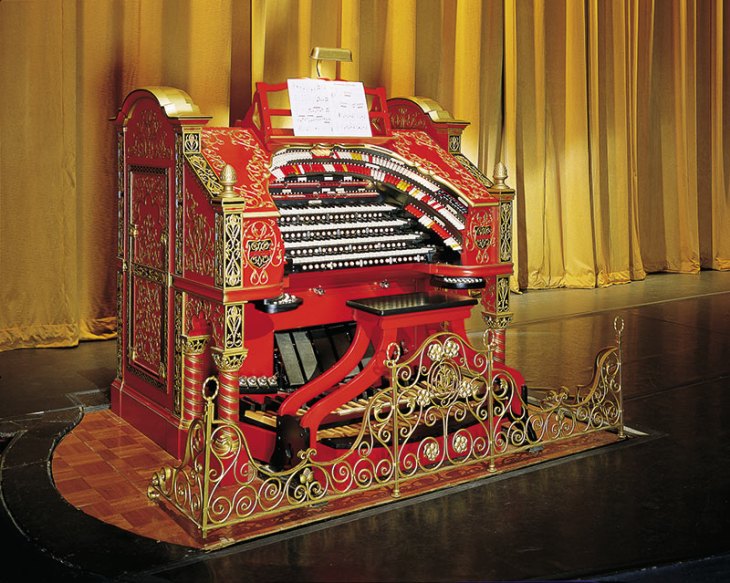
Mother grew up in the Birmingham, Alabama, area. When I was a little girl, she told me she used to go to the Alabama Theatre in downtown Birmingham for the Mickey Mouse Club on Saturdays. She made a big deal in telling me about the giant organ that would rise up out of the floor of the theatre.

auditorium

Interior of Alabama Theatre. Photo from Alabamatheatre.com. The theatre was home to the country’s largest Saturday morning Mickey Mouse Club at one time. It was also the first air-conditioned public building in Birmingham.

I didn’t tell Mother at the time, but when she said that about the organ rising from the floor, I thought she must have been mistaken. I honestly thought her memory must have been playing tricks on her, because who ever heard of an organ rising up out of the floor?

It just didn’t make sense to me, but I didn’t argue with her. I just thought her little girl brain had been tricked into thinking the organ came out of the floor…some sort of optical illusion or something.

Then, in my late 20s, I read Fannie Flagg’s Fried Green Tomatoes at the Whistlestop Cafe. Well, since Fannie Flagg is from Alabama, I’m guessing she must have visited the Alabama Theatre, because in the book, she mentions the organ. She mentions how the organ rises up from the floor!

So Mother’s memory wasn’t playing tricks on her, after all! I promptly called her to tell her what I’d read. She said, “I’ve been telling you about that organ for years!” I confessed, “Well, I know, Mother, but I thought your memory was playing tricks on you!” We had a good laugh over it.

wurlitzer-2

Photo of Big Bertha, The Mighty Wurlitzer, from Alabamatheatre.com

To see more about the Alabama Theatre and the organ they call Big Bertha, The Mighty Wurlitzer, click here. The theatre has an interesting history, and the organ was one of only 25 of its type ever built.

It makes me wonder what I’ve told my daughter that she questions. Maybe she keeps it to herself that she thinks I’m talking out of my mind when I talk about a childhood memory.

Let’s take, for example, the time I caught a really big catfish in the neighborhood lake. When I was a little girl, we would go cane-pole fishing down at the lake at the bottom of the hill in our neighborhood. Sometimes we would catch catfish and take them home for Mother to clean them and fry them up, and sometimes, we had no luck at all. One time, I caught the record catfish…a record for us, anyway. It might have been five pounds. As soon as I caught it, we took it home. My brother and I had catfish for dinner that night.

Maybe my daughter thinks I was confused about how big that fish was.

Maybe she thinks I’m crazy when I tell her otters lived in that neighborhood pond. They did. I saw them from the school bus window one morning. Everybody had been talking about them for weeks, and finally, I saw them surface.

Maybe my daughter thinks I saw a dog swimming through the pond and thought it was an otter.

I didn’t go to school with anybody famous. None of my friends have become famous (yet), so I don’t have any stories to tell my child about “I knew him when.” I don’t remember anything like The Mighty Wurlitzer from my childhood, so all I have is the pond with the catfish and the otter.

I haven’t even been to see The Mighty Wurlitzer rise up out of the floor at the Alabama Theater. But in December, I plan to make a trip to Birmingham. Every year, the Alabama Theater shows classic holiday movies on the big screen. I’ll go, and when I see The Mighty Wurlitzer come up out of the floor, I’ll think of my mother and laugh about how I thought she was confused…just like I think of my daddy every time I think of that famous photo of Faye Dunaway (click here to see the iconic photo taken the morning after she won the Academy Award) at the Beverly Hills Hotel.

Chicken Necks Make Great Crab Bait (and other Life Lessons From My Mother)


img_5351

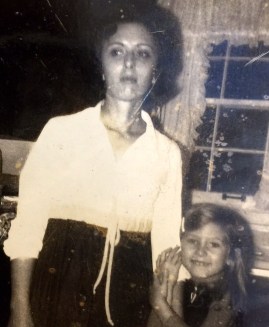
My mother and I, probably February 1974. (I look thrilled to take a picture with her, but she looks like she could use a martini.) One of my favorite pics.

It’s almost Mother’s Day weekend, and this is my first Mother’s Day without my Mother. She passed away in December.

I’ve lost a parent before. My daddy died in 2006. I know how difficult all these “firsts” are. They’re tough, but I also know it’s a good time to reflect on my life and what my parents taught me. In this case, since it’s Mother’s Day, I will reflect on what she taught me. Of course, there is no way to cover it all, but I will do what I can.

My mother wanted nothing more than she wanted to be a mother. She loved being a mother, and she loved mothering…neighbors, neighbors’ kids, classmates, friends…she took care of lots of us. She was an exceptional caretaker…it was what she did.

My earliest memories are from my early years in Brewton, Alabama. I remember wanting to go to school. I must have been almost or barely three. My mother called her preferred preschool, but there was no class for three-yr-olds. The owner/teacher relented after Mother called her several times, but she would only take me if I were potty-trained. I was, so I started preschool.

Other parents got wind of it and called her too. And it worked out well for the teacher, because she then had double the number of students…four-yr-olds for part of the day, and three-yr-olds for part of the day. Nobody loved that teacher or her preschool more than I did.

My mother was my advocate.  She taught me to advocate for my child.

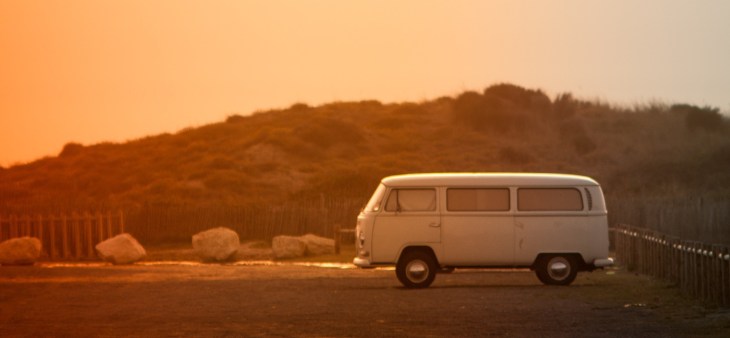
A couple years later, she decided she wanted a Volkswagen microbus for us to take on road trips. After searching for the perfect one, my parents bought a beige and white one. Mother couldn’t drive a stick-shift, but she learned quickly as soon as we got the bus. I remember stalling at traffic lights in downtown Brewton as she learned to work the clutch, but she did it. She was determined. At 34, she learned a new skill…driving a stick. Daddy would always laugh that we chose to take the un-air-conditioned bus on road trips. “We have two perfectly good air-conditioned cars sitting in the driveway, yet we opt to travel in this!”

Mother taught us to try new things, and she taught us to be resilient.

olaf-huttemann-8029-unsplash.jpg

When I was seven, halfway through second grade, my family moved to Spanish Fort, Alabama, a community on the Eastern Shore of Mobile Bay. Some mothers would be nervous about a new place and new school, and the kids would feel that, but my mother approached the move as if it were an adventure. The transition was a smooth one at my new school and neighborhood.

Living near the water was a new adventure for all of us, and Mother took full advantage of that. Unafraid of a new challenge, she talked with locals and learned how she could take us out to the Fairhope Municipal Pier to catch crabs from Mobile Bay. She learned chicken necks are good crab bait, and she learned how to tie them into the nets and how to hang the nets from the pier. Back then, it was OK to hang the nets. She learned how to get the crabs out of the nets and cooked them up when we got home. She even made her own recipe for crab cakes.

She taught us to be adventurous.

For more information on Fairhope, click here.

adam-wyman-20682-unsplash.jpg

We spent almost every afternoon and many evenings at the pier. One day we were catching lots of crabs, so we stayed into the night, checking those nets regularly. At some point, I was stooped down, pulling up one of the nets to check it for crabs, and I looked up. I saw some men coming down the pier dressed all in white. I’d never seen anything like it.

I walked over to my mother and asked, “What are those clowns doing here?” It was actually members of the a white supremacist group. She said to me, “Just keep doing what you’re doing. They won’t mess with you. I need to go over here and sit with Miss Essie, so they think she’s with us.” She then got up and walked over to a bench to sit with a sweet, elderly African-American lady we had met months before, and with whom we often visited on the pier. Soon thereafter, we left the pier for the night, and Miss Essie left with us. Once we knew Miss Essie was OK, we got in the car, and it was then Mother explained everything to us.

Mother taught us compassion and that it’s important to help other people. She also taught us we are all created equal.

It’s important for me to tell you that most people I know who grew up in Alabama have NEVER seen the aforementioned white supremacist group. That sighting on the Fairhope Pier that night (I think it was 1976) was extremely rare, especially in quaint, upscale towns like Fairhope, which is why it is memorable. I don’t want readers to think it is/was a regular occurrence. In fact, I can’t name even one of my friends who has encountered the group anywhere. 

No matter where we lived, Mother volunteered. Sometimes she volunteered at the school, and often, she volunteered with the Red Cross. She was a Registered Nurse, and while I’m not sure what she did with the Red Cross, I know she went into underserved neighborhoods. She used to come home talking about what nice people she had met along the way.

She also seemed to always meet people who had elderly family members who needed care. In one place we lived, an elderly couple lived across the street, and Mother would check on them every day, helping them with tasks on a regular basis. After we moved, an elderly gentleman around the corner needed assistance a few times a week. Mother helped him. We received several late night calls over the years…people needing her assistance, and she was always willing to help. Not many people knew she did this, because she didn’t toot her own horn. She believed it diminished the deed if you went around boasting about it.

Mother taught us to help those who are less fortunate.

When I was a teenager, I learned a lot more from my mother. Just yesterday I was dress shopping with my 14-yr-old daughter, and I thought of my mother when I heard myself say to my daughter after she gave “thumbs down” to another dress I held up, “You don’t really know what it looks like till you try it on.” That was straight from my mother. That, and “Always put on lipstick before you leave home.”

While she taught me not to be superficial, she also taught me to try look “presentable.”

As we went through high school and college, my brother and I learned that our mother had a great sense of humor. That’s not to say we didn’t get in trouble, but she didn’t make a big deal out of things that weren’t a big deal. She also tried to approach situations with humor, and the good Lord knows, she loved to laugh. Even in the last year of her life, she loved when our now-adult friends from college came over to visit at her house. I think it reminded her of when we were younger. We would all sit around and laugh, and that was when she was her happiest.

She taught us not to take life too seriously, and she taught us about perspective.

IMG_5410

Mother and my daughter at dinner one night.

Mother was a tough chick, and we are who we are because of her and Daddy. I like to think I’m passing some of their wisdom and humor to my daughter.

When mother passed in December, we wrote her obituary with all the normal information about family, but we also included a list of things she had taught us. Because she did not want to have a funeral service, we thought it was important for people to know who she was. Here’s the list:

LESSONS FROM MY MOTHER:

Nobody goes hungry on Mama’s watch. It doesn’t cost anything to be kind. It’s OK to laugh at yourself. Save for a rainy day, and when it does rain, splash in the puddles. Take care of your brother/sister, your children, and other people’s children. Enjoy coffee with friends at Waffle House on a regular basis. Call your mama often. Raise your children to be independent, and encourage them to spread their wings. Spend time with your children and their friends (especially at Coaches Corner). Ladies never leave home without lipstick. It’s never too late to learn to drive a stick shift. If you break an arm, you can make your own sling till you get to the ER. Always say “I love you” at the end of a phone call or visit. What other people think is not important, because God knows what you are doing. Laughter cures a lot of ills. Doing something nice for someone else will make you happy. Never pay full price if you don’t have to. Children/teens sometimes think small things are big deals; remember they are big deals to them. Pizza will cure the Sunday night blues. Don’t schedule events during football season. Learn new skills your whole life. Be grateful. Turn it all over to God. You can’t tell what clothes look like till you try them on. Chicken necks are perfect bait for crab nets. Defend people who can’t defend themselves. It’s more important to get into Heaven than it is to get into Harvard. If you want to have good friends, you have to be a good friend. Life is not a dress rehearsal; make it good. All people are created equal.
We loved our mother, and we will make a toast to her on Mother’s Day. God Bless Mama.